The Promotion Case in the Concrete Mix: How Net-Zero Decisions Become Career Evidence
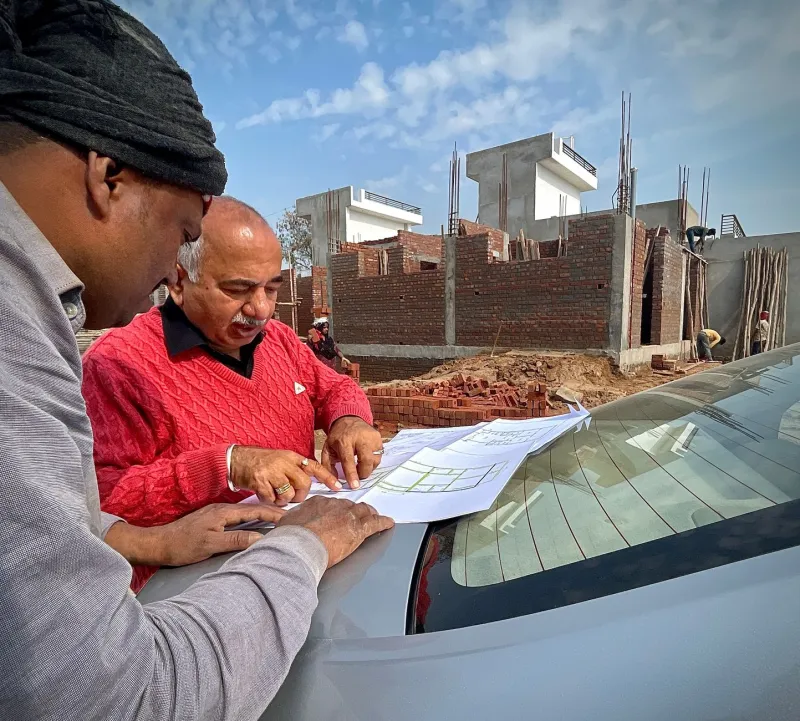
Net zero is now part of the delivery brief on most UK civil engineering projects. Client specifications, procurement models and planning conditions increasingly require engineers to account for carbon, materials and waste. Yet on many sites the subject is still handled as a monthly data request or a sustainability colleague's concern. That is a missed career opportunity.
For early-career and mid-level engineers, carbon work is not a side quest. It is a record of technical judgement, commercial awareness and stakeholder management — the same qualities professional reviewers and promotion panels look for. The difference between a vague claim and credible evidence is usually not the size of the decision. It is whether the engineer recorded the context, the alternatives and the outcome.
Carbon decisions are engineering decisions
Consider a lower-carbon concrete specification. The useful evidence is not simply that a project used a cement replacement. It is that you reviewed the structural and durability requirements, understood the curing and testing implications, compared available mixes, discussed risk with the designer and supplier, and recorded why the chosen option was appropriate. That is a technical decision with a carbon outcome. It belongs in a chartership portfolio and in a promotion conversation.
The same applies to haulage. Reducing vehicle movements by reusing spoil, adjusting a earthworks sequence or consolidating deliveries may look like site logistics. In practice it requires an understanding of programme, cost, contamination risk, licensing and neighbour impact. A well-written note explaining the constraint and the saving is far more persuasive than a headline figure copied from a report.
Temporary works offer another route. Reusing sheet piles, selecting modular props or reducing excavation can lower embodied carbon and waste. If you can explain the design check, the installation risk and the coordination required, you are demonstrating exactly the kind of applied judgement that distinguishes a site engineer ready for more responsibility.
PAS 2080 reporting should be treated in the same way. The framework asks projects to manage carbon across the whole life of an asset, but its day-to-day value to your career lies in the data trail. A baseline, a monthly variance, an assumption log and a clear explanation of a change are all evidence of disciplined delivery. They show that you can work with uncertainty without losing control of the record.
The evidence log that survives review
A simple log is enough, provided it is completed close to the event. Do not wait until appraisal season. The following template can sit in a spreadsheet or project notebook:
| Date | Decision or issue | Carbon or resource consideration | Your role | Data or assumption used | Outcome and lesson | Portfolio link |
|---|---|---|---|---|---|---|
| 14 Mar | Reviewed CEM III concrete option for retaining wall | Lower embodied carbon; slower strength gain; curing risk | Reviewed specification, chaired supplier call, recorded decision | Supplier EPD; design strength requirement; programme allowance | Mix accepted with extended curing; 18% reduction against baseline | Technical judgement; sustainability; stakeholder management |
| 02 Apr | Revised muck-away sequence | Reduced vehicle movements and local disruption | Coordinated with earthworks contractor and temp works designer | Haulage records; spoil classification; programme | Six fewer movements per day over two weeks | Commercial awareness; site logistics |
| 21 Apr | Temporary works prop reuse | Avoided new steel and reduced waste | Checked reuse condition with temp works coordinator | Inspection notes; design assumptions | Reuse approved subject to monitoring | Risk management; temporary works |
The final column matters. It forces you to connect the event to the attribute or competency it demonstrates. Without that link, a strong decision can disappear into a general claim about being sustainability-minded. With it, the same decision becomes a structured example for a professional review submission or a promotion case.
Questions that test whether net zero is real
Employers often say the right things about sustainability. Engineers should test whether responsibility is genuinely distributed or merely delegated to a central team. Before accepting a role, or during a probation review, ask:
- Who owns carbon performance on the project, and is it written into my objectives?
- Can I see the carbon baseline and the monthly variance, or is the data held elsewhere?
- Are carbon reductions discussed in progress meetings with the same rigour as cost and programme?
- Do I have a route to challenge a specification without being treated as a source of delay?
- Will my line manager review evidence quarterly and support PAS 2080 or carbon literacy training?
- What authority do I have to approve data collection, trial a lower-carbon option or stop an inefficient haulage pattern?
- Are sustainability roles integrated with delivery, or kept at arm's length from site decisions?
- How is success measured beyond a monthly box-ticking return?
A good employer will not have perfect answers. It will, however, be able to show where responsibility sits and how an engineer can earn more of it. That is the difference between a sustainability box and a career development route.
Turning the record into a promotion case
At appraisal or professional review, avoid claiming that you 'delivered net zero'. Be specific. State the constraint, the option you evaluated, the advice you sought, the decision you influenced and the measured or estimated result. If the saving was modest, say so. Reviewers trust proportion more than performance.
Use the evidence log to prepare three or four compact examples. Link each one to the relevant competency, whether that is technical judgement, sustainable development, commercial awareness or health and safety. Keep the supporting documents — the email confirming the mix, the haulage record, the temporary works inspection note, the monthly carbon return. A short paper trail is more convincing than a long narrative.
In 2026, carbon literacy is becoming part of ordinary civil engineering competence rather than a specialist add-on. Engineers who can show that they have made better material, logistics and temporary works decisions — and can explain them clearly — will be well placed for chartership and for the next step up. The promotion case may not be in the presentation. It may be in the concrete mix, the haulage plan and the note you wrote while the decision was still live.