Three Chairs, Not One: Assembling the Support Team Your Chartership Application Actually Requires
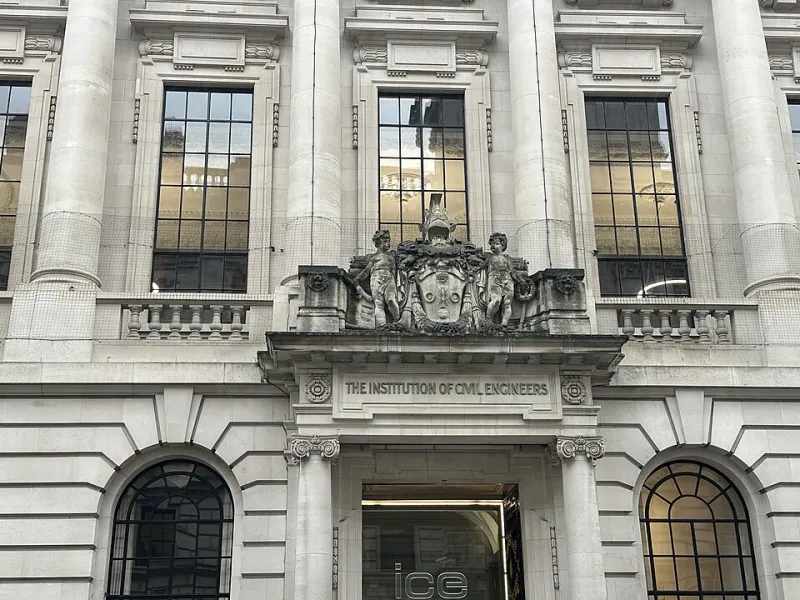
Photo: Matt Brown, CC BY 4.0, via Wikimedia Commons
Almost every piece of chartership guidance circulating in UK consultancies says the same thing: find a mentor, meet regularly, and let the relationship do its work. The advice is not wrong, but it is incomplete. A single willing colleague, however senior, cannot simultaneously interrogate your technical reasoning, guarantee you the projects that generate evidence, and argue your case to a panel you will never meet. Those are three different jobs. They usually require three different people, and each has to be asked for help in a different register.
Candidates tend to discover this late. They spend eighteen months in agreeable monthly coffees with a supportive principal engineer, arrive at the submission with a folder of thin records and no clear narrative, and conclude that the system is opaque. More often, the arrangement was simply the wrong shape.
The mentor: the person who makes your reasoning uncomfortable
The mentor's contribution is intellectual. Their job is to take a piece of work you believe you understand and test whether you actually do — to ask why you selected that temporary works solution, what you would have done had the ground conditions differed, and which assumption in the calculation you were least confident about.
That is a narrower brief than most mentoring arrangements assume, and it means the most senior person available is rarely the best choice. A recently chartered engineer who sat their professional review within the last three years, and who has kept up with the current ICE or IStructE guidance, will often be sharper on the evidence requirements than a technical director who last assembled a portfolio in 2011.
Look for someone outside your direct reporting line, so that admitting a gap carries no career consequence. Meet monthly, for an hour, and send evidence in advance — a single record, a drawing, a short note on a design decision. The meeting then has something to bite on.
The line manager: the person who controls the calendar and the drawings
The manager's role is structural rather than intellectual, and it is the one candidates most often leave to chance. No amount of mentoring compensates for two years spent on a single repetitive package, or for a diary so compressed that reflective write-ups never happen.
This conversation belongs in a scheduled development review, not a corridor. Frame it in the language managers are judged on: programme certainty, risk, and demonstrable competence on the projects the business needs delivered. A request to be moved onto a drainage package, or to take ownership of a section of the works, is easier to grant when it is tied to a specific development objective and a date.
Ask for two things plainly: named project exposure, and protected time. A half-day each quarter is usually sufficient and rarely refused when it is booked rather than hoped for.
The sponsor: the person who speaks when you are not in the room
Sponsorship is the least discussed and most misunderstood of the three. A sponsor is a senior figure who knows your work well enough to describe it accurately to others — in an internal talent discussion, in a supporting statement, or when a panel or an interview convenes. They are not necessarily your biggest fan; they are credible, informed and willing to use their standing on your behalf.
The ask is direct, and it helps to be specific about what you want. Most senior engineers will agree to a vague request for 'support'. Fewer will deliver a considered written statement unless they are told the deadline, the format and what evidence you can supply.
Scripts for the awkward ask
Most candidates hesitate because the request feels like an imposition. Naming the role explicitly removes most of the awkwardness.
I am working towards my professional review in 2028 and I am looking for someone who will challenge my technical judgement rather than reassure me. Would you review one piece of evidence a month and tell me where the reasoning is weak?
I would like to discuss my development objectives for the next twelve months. Specifically, I need exposure to temporary works design and a half-day each quarter to write up records. Can we put both in my review document with dates against them?
When my review comes round, I would value you as a sponsor — someone who can describe my work to the panel from direct knowledge. Could we agree now what you would need from me to write that statement?
A rhythm that keeps all three alive
Relationships decay quietly. A simple quarterly cycle prevents that: mentor meetings monthly, evidence logged against development objectives and reviewed with your manager each quarter, and a short check-in with your sponsor twice a year to confirm the narrative still matches the work you are actually doing.
Keep a single-page log — date, activity, evidence produced, objective addressed. Bring it to every conversation. It converts vague encouragement into a record, and it gives a sponsor something concrete to work from.
Warning signs you have a companion rather than a mentor
- Feedback stays general: 'that looks fine', 'you are doing well'.
- Nothing is ever queried, including work you know was rushed.
- Evidence is reviewed in the meeting rather than beforehand.
- Sessions drift into workload complaints and never return to the portfolio.
- The guidance being applied is remembered rather than read.
Any one of these is survivable. All five, sustained over a year, means you are being comforted rather than prepared.
Small firms and overlapping roles
In a practice of thirty people, your manager may also be the only plausible sponsor. That is workable if you acknowledge it: declare the overlap openly, and source your mentor from outside the business through an institution regional group or a former colleague. A mentor who has no stake in your internal reputation will tell you things your employer will not.
Chartership is ultimately a record of your own judgement, tested against a standard. Three people — one to interrogate it, one to resource it, one to defend it — make that record considerably harder to get wrong.