The Short Morning Contract: Briefings That Build Site Authority
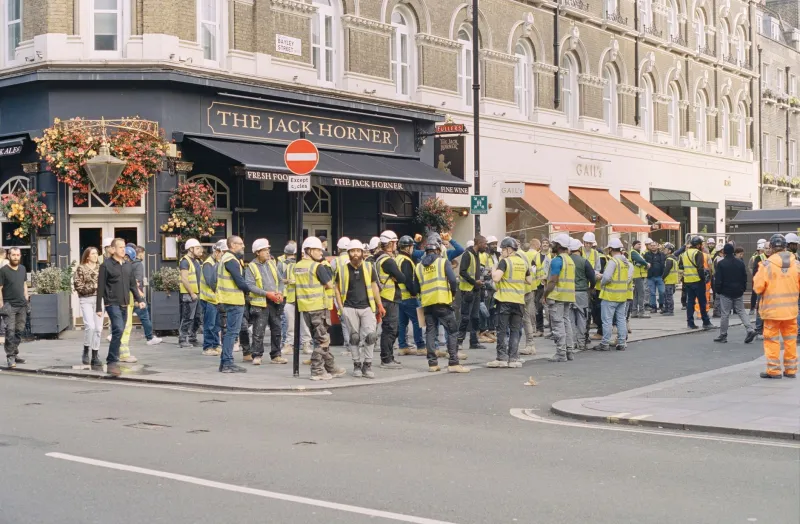
On a UK site in November, the pre-start briefing competes with cold hands, idling plant and the first delivery of the day. It is tempting to treat it as a ritual: read the same notices, repeat the same warnings, then disperse. Early-career engineers often inherit that habit. The better approach is to treat the briefing as a short morning contract between you and the people who will execute the work. Ten minutes, properly prepared, can do more for your site authority than an hour of paperwork.
Prepare in five minutes, not fifty
Preparation begins before the huddle. Read the day's programme, yesterday's site diary and any new permits or RAMS. Identify only the items that change today's risk or sequence: a scaffold lift, an excavation inspection, a concrete pour, a delivery that will block access. Write three prompts on a card: what we are doing, what could hurt us, who needs what from whom. If a temporary works check is due, confirm the checking regime before you address the crew. Arrive at the briefing point early enough to move people away from plant routes and noisy equipment. A whiteboard or a simple sketch is more useful than a clipboard read aloud. The briefing does not replace the induction or the task-specific RAMS; it connects them to the day in front of you.
Say less, mean more
A briefing that tries to cover everything will be remembered for nothing. Structure it around four points. First, the headline for the day: the main activity and any change from yesterday. Second, the safety-critical controls: specific hazards, exclusion zones, permits and the person responsible for each. Third, the sequence and interfaces: who needs access to which area, when a delivery is expected, and where trades must hand over. Fourth, one clear ask: a confirmation, a check or a behaviour you expect.
Leave out the long restatement of RAMS. The crew should already have been briefed on method; the morning huddle is for today's application. Leave out individual blame and vague warnings such as "be careful out there". Leave out policy speeches that belong in an induction. Use plain language and name the control. "The north elevation scaffold lift starts at eight. The exclusion zone stays until the scaffolder hands over. No one passes under until the tag is green" is more useful than a general reminder about PPE.
Read the room
Attention is visible. Watch where people stand, who is looking at the drawing and who is on a phone. If a subcontractor's crew is at the back and disengaged, ask a targeted question rather than raising your voice: "How are you planning to get materials to level two without blocking the fire escape?" Use names where you know them. Ask one person to repeat back a critical control; if they cannot, the briefing has not landed. Keep the group small enough to hear, and in winter keep it short. Where language or literacy is a barrier, use a sketch and confirm understanding through the supervisor.
Follow up without micromanaging
The briefing ends with a decision, not a performance. Record the key points in the site diary: permits checked, exclusion zones agreed, deliveries timed, actions allocated. Follow up at natural checkpoints rather than hovering. "I will check the exclusion zone at ten" is a commitment; "I will watch you all morning" is surveillance. Close the loop the next day by acknowledging what worked and correcting what did not. If someone ignores a control, address it privately and specifically, and escalate through the supervisor if safety is at stake. Consistency builds more authority than constant intervention.
Bring subcontractors with you
Subcontractors buy into briefings that respect their time and knowledge. Hold the huddle at a time they can attend, and do not detain an entire crew for information that affects only one trade. Ask chargehands for sequencing constraints before you finalise the plan. Explain why a control exists, not just that it does. Keep the format predictable so people know what to expect. Never use the briefing to publicly criticise a subcontractor; raise issues privately and record them. When a chargehand raises a problem, respond in the next briefing so the crew sees that the forum has value.
A ten-minute template
- Minute 0–1: headline and changes from yesterday.
- Minute 1–4: safety-critical controls, permits and exclusion zones.
- Minute 4–7: sequence, access and trade interfaces.
- Minute 7–9: questions, confirmations and one repeat-back.
- Minute 9–10: one ask and close.
The pre-start is not a box-ticking exercise. It is the point where programme, safety and people meet. Run it with preparation and restraint, and it becomes a tool for site authority: not the loudest voice on site, but the clearest.